

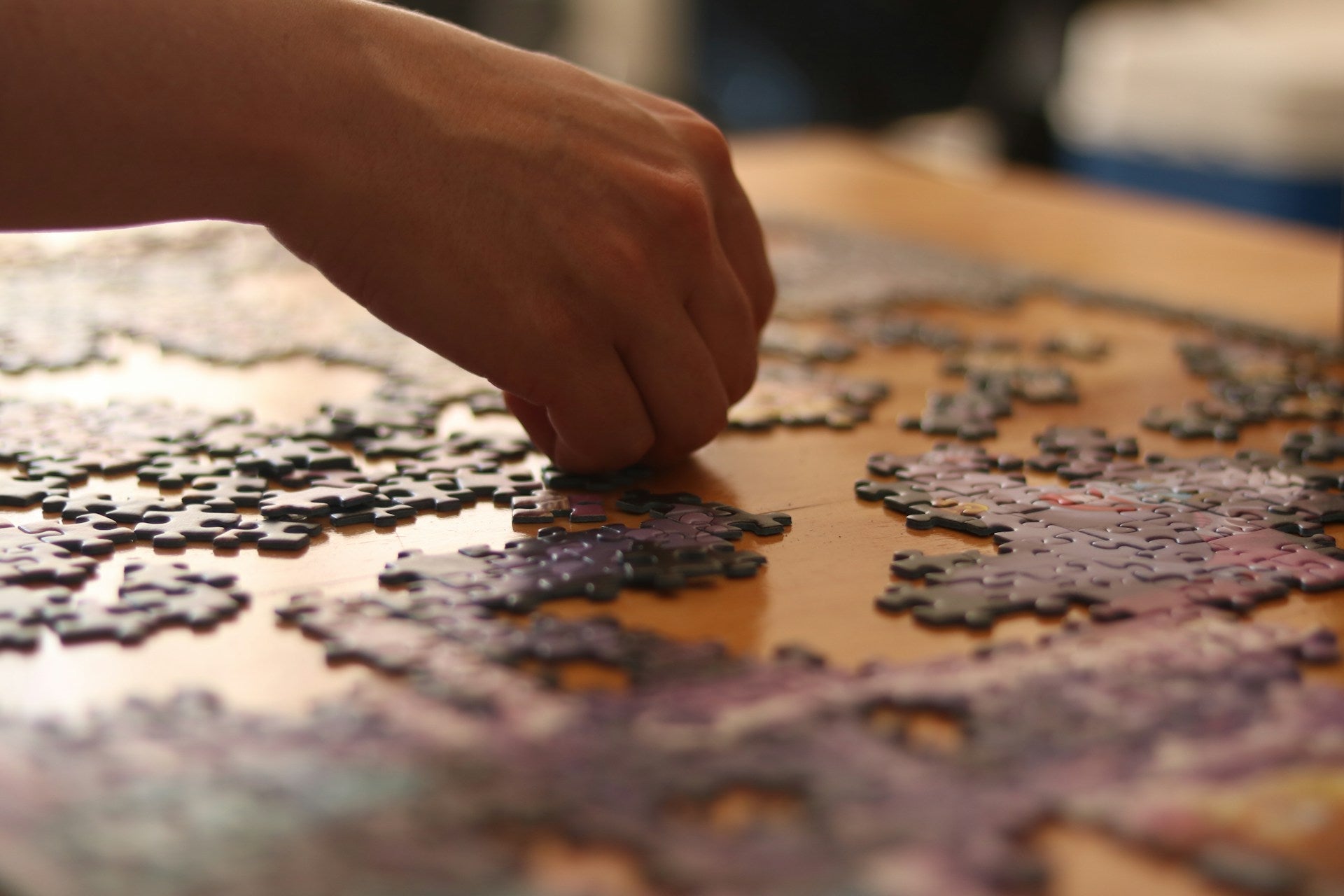
The antidote to daily stress might be sitting right on your dining room table. In a fast-paced digital world dominated by constant notifications and endless scrolling, finding a true sense of calm can feel like searching for a missing piece. Puzzling—once viewed merely as a quiet rainy-day pastime—has emerged as a powerful, accessible tool for mental health. In addition to scientific studies demonstrating the benefits to cognitive function, puzzling offers a unique blend of relaxation, focus, and low-stakes social connection.
The Power of Focus and Relaxation
When you sit down with a jigsaw puzzle, your brain shifts gears. The simple act of sorting shapes, matching colors, and fitting pieces together acts as a form of active meditation. It requires just enough concentration to quiet the background noise of everyday anxieties and forces your mind into the present moment.
This gentle hyper-focus lowers heart rates and induces a state of creative flow, giving the overworked brain a much-needed break from digital fatigue. For many, this therapeutic benefit becomes a vital lifeline during difficult life transitions, offering a gentle space to heal and rebuild. Jen Ferris shares how transformative puzzling has been for her. "A few years ago, I found myself in an unhealthy marriage, and as I was finally moving on, I went on a journey to find myself and ended up rediscovering my love for puzzling," Jen said. "On that journey, I discovered speed puzzling and joined Zoom competitions. This is where I was first introduced to Boardwalk Puzzles. I have also found a lot of joy in sharing my love for puzzles on social media. It has allowed me to make great friends all over the world. It is something I am very passionate about, and this has been more of a healing journey for me than anything else."
A Low-Stakes Way to Connect
Beyond individual mindfulness, puzzling serves as an incredibly low-stakes connecting activity. Unlike intense competitive board games or forced social gatherings, working on a puzzle with others removes the pressure of face-to-face expectations.
You can sit in comfortable silence, collaborate on a difficult section, or chat effortlessly while your hands stay busy. This shared focus builds organic bonds, whether you are puzzling with family at home or engaging with a global community online to manage daily stressors.
Javier Mulet’s love for puzzling began in 2021 when he started building puzzles with his family. What started as a relaxing hobby quickly became a true passion and creative outlet.
"For me," Javier said, "puzzling has become much more than just a hobby. It has helped me manage anxiety and support my mental health while also connecting me with many amazing people in the puzzle community. The creativity, focus, and sense of accomplishment that come with puzzling continue to inspire me every day, and I love sharing that experience with others through my YouTube channel."
Finding Your Peace, One Piece at a Time
Ultimately, putting together a puzzle reminds us that even the most chaotic situations can be sorted out, one small piece at a time. Whether you are looking to quiet a racing mind, heal from past hardships, or build meaningful relationships without the pressure of modern socializing, clearing off a table and opening a new puzzle box might be exactly what your mental health needs.
Share:
Celebrating America’s 250th: Boardwalk Puzzles Honors the Semiquincentennial with "America the Beautiful"