
Why Puzzles Are the Ultimate Brain Workout
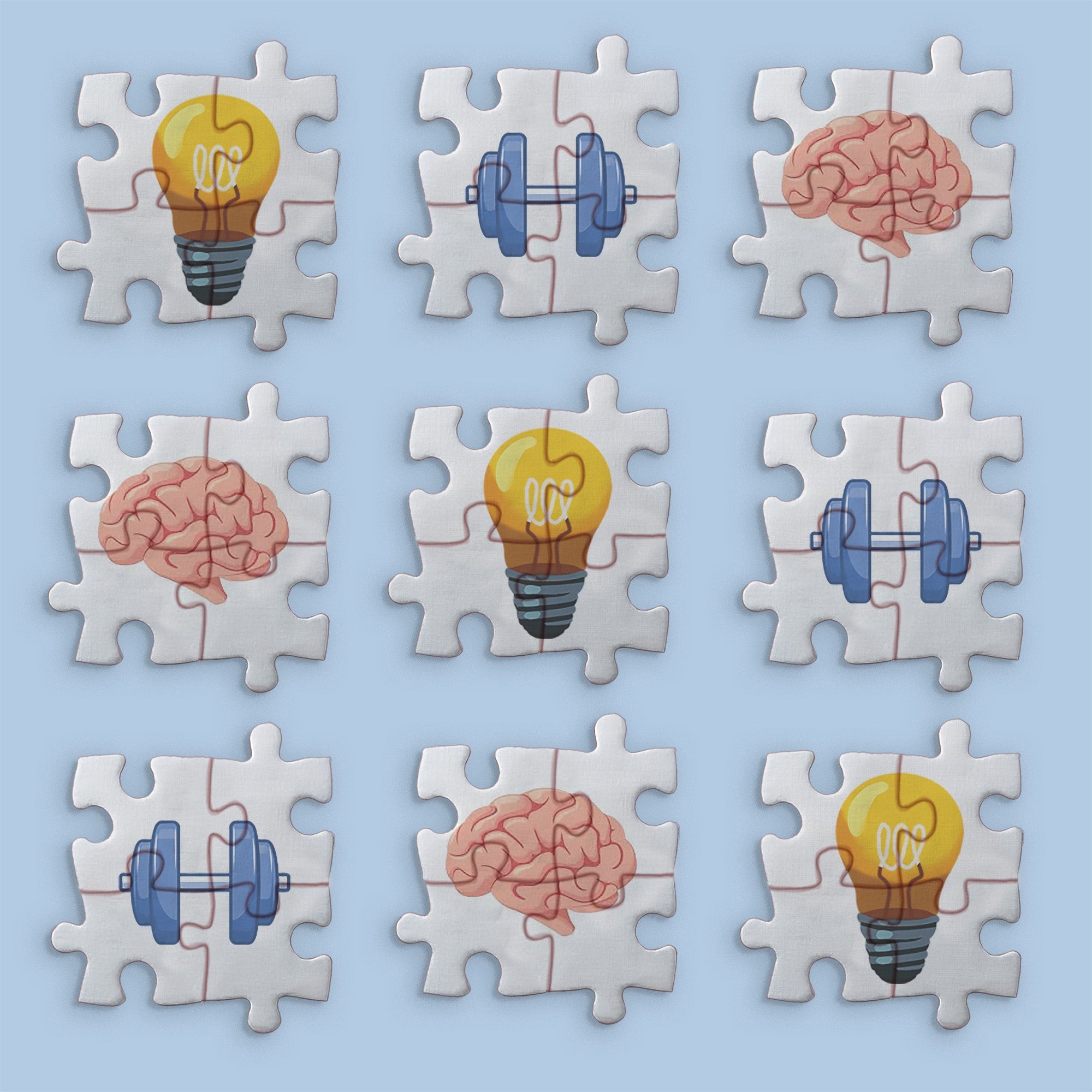
We often hear about the importance of staying active as we age, but we usually picture walking shoes or yoga mats. While physical exercise is vital, your brain requires its own version of a treadmill to maintain its edge.
One of the most effective—and enjoyable—tools for cognitive maintenance is likely sitting on your bookcase right now: the humble jigsaw puzzle. Far from being just a rainy-day hobby, puzzling is a potent exercise that builds cognitive reserve and keeps your mind agile. This is your brain's resilience. It is the ability to maintain function despite damage from aging, injury, or diseases like Alzheimer's, by using alternative neural pathways and strategies. Your cognitive reserve is built over a lifetime through education, complex occupations, mentally stimulating hobbies (reading, games, crafts), physical activity, good nutrition, and social engagement. It acts like a "savings account" for brain power.
Dual-Brain Workout
Most tasks we perform daily lean heavily on one hemisphere of the brain. Jigsaw puzzles are unique because they demand a "whole-brain" approach:
- The Left Brain (Logic): This side works through the puzzle systematically. It handles the linear thinking required to sort edges, categorize colors, and logically deduce where a piece should go.
- The Right Brain (Creativity): This side engages with the big picture. It uses intuition and "map-making" skills to visualize how various colors and patterns will eventually coalesce into a finished image.
By engaging both sides simultaneously, you are effectively strengthening the neural connections between the two hemispheres.
Improving Short-Term Memory
Have you ever looked at a tiny fleck of blue on a puzzle piece and suddenly remembered seeing a matching shade in a pile of 500 other pieces? That is your short-term memory in action.
Puzzling requires you to constantly store small bits of information—shapes, colors, and minute details—and recall them moments later. This repetitive "search and find" process reinforces the neural pathways responsible for memory retention, which can translate to better recall in your daily life.
Mastering Visual-Spatial Reasoning
Visual-spatial reasoning is the ability to look at an object and mentally manipulate it. When you look at a puzzle piece and rotate it in your mind to see if it fits into a specific gap, you are performing a complex cognitive maneuver.
This skill is crucial for everything from driving and navigating a new city to packing a suitcase or even performing surgery. Regular puzzling keeps these spatial "muscles" flexed and ready.
A Shield Against Cognitive Decline
Perhaps the most compelling reason to pick up a puzzle is its long-term impact on brain health. Research suggests that keeping the brain active through cognitively demanding hobbies can help delay the onset of symptoms related to dementia and Alzheimer’s disease.
Building your cognitive reserve by making regular deposits into your brain’s “savings account” strengthens the brain’s ability to improvise and find alternate ways of getting a job done—you essentially create a "buffer" against age-related decline. The more you challenge your brain now, the more resilient it remains later.
In summary
Jigsaw puzzles serve as a comprehensive "treadmill for the brain," enhancing cognitive longevity by building cognitive reserve. This mental resilience acts as a "savings account," allowing the brain to maintain function and improvise through alternative neural pathways as we age. By requiring a whole-brain approach, puzzles synchronize the logical left hemisphere with the creative right hemisphere, strengthening neural connections.
Furthermore, the activity provides a specialized workout for short-term memory and visual-spatial reasoning, creating a protective buffer that can help delay the onset of symptoms related to cognitive decline and dementia.
Sources:
Fissler, P., Küster, O. C., Laptinskaya, D., Loy, L. S., von Arnim, C. A., & Kolassa, I. T. (2018). Jigsaw Puzzling Taps Multiple Cognitive Abilities and Is a Potential Protective Factor for Cognitive Aging. Frontiers in Aging Neuroscience, 10(299).
Levine, S. C., Ratliff, K. R., Huttenlocher, J., & Cannon, J. (2012). Early puzzle play: A predictor of preschoolers' spatial transformation skill. Developmental Psychology, 48(2), 530–542.
Harvard Health Publishing. (2021). Train your brain. Harvard Medical School.
Snowdon, D. (2001). Aging with grace: What the nun study teaches us about leading longer, healthier, and more meaningful lives. Bantam Books.
Zhu, N., Jacobs, D. R., Schreiner, P. J., Yaffe, K., Bryan, N., & Launer, L. J. (2014). Cardiorespiratory fitness and cognitive function in middle age: The CARDIA study. Neurology, 82(15), 1339–1346.
Share:
HEALTH: Mindfulness
HEALTH: Physical Vitality