
The Surprising Physical Benefits of Puzzling
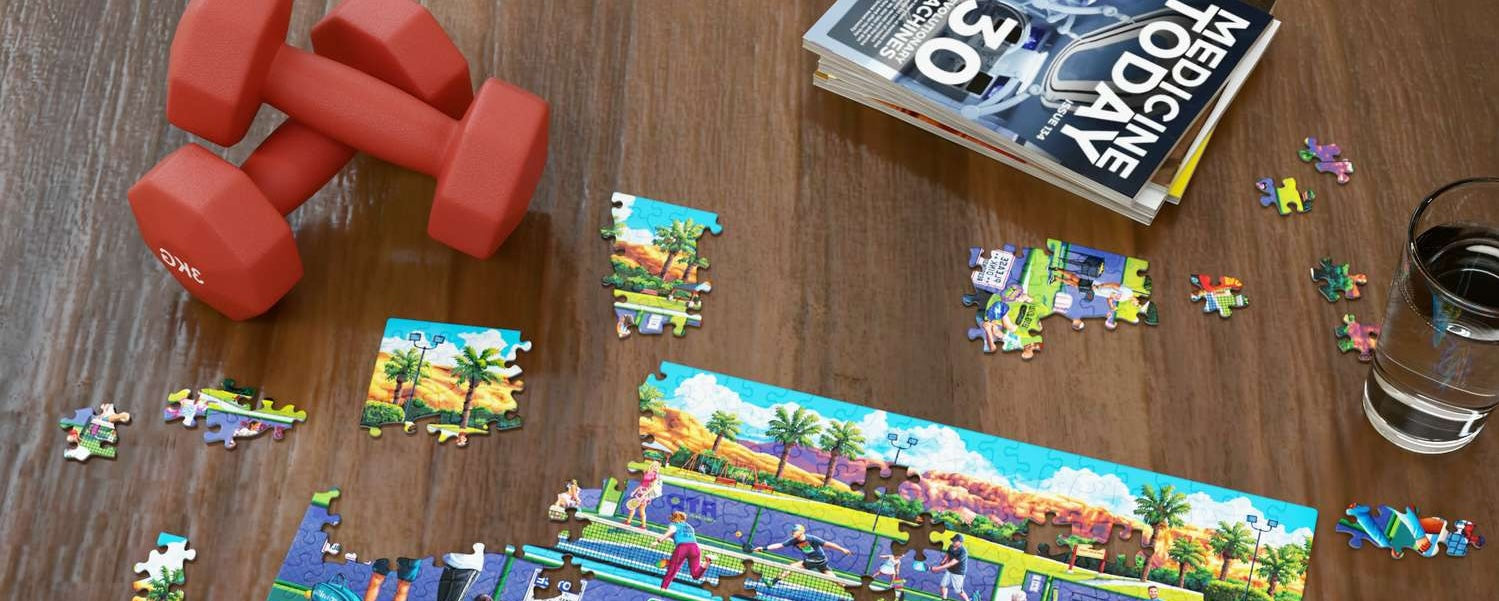
When we think of jigsaw puzzles, we usually imagine a quiet room and a sharp mind. We focus so much on the mental gymnastics involved that we often overlook the physical movement happening right at our fingertips.
While puzzling is a stationary hobby, it is far from inactive. From fine-tuning your motor skills to lowering your physiological stress markers, the physical act of puzzling offers a unique set of health benefits that go far beyond the brain.
Precision in Play: Fine Motor Skills and Coordination
The most immediate physical demand of a puzzle is the manipulation of the pieces. Selecting a small, uniquely shaped fragment and precisely fitting it into a jagged slot requires significant dexterity.
- Hand-Eye Coordination: Your eyes and hands must work in perfect synchronization to identify a shape and move it to its exact destination.
- Finger Dexterity: For older adults or those recovering from hand injuries, picking up and rotating small pieces provides essential exercise for the small muscles in the fingers and wrists. As noted in research on occupational problem solving, these tactile activities are vital for linking cognitive intent with physical action.
Exercising Your Eyes
We spend much of our day looking at screens, which often leads to digital eye strain and fixed focal distances. Puzzling offers a restorative workout for the eye muscles.
As you puzzle, your eyes are constantly shifting focus between a small piece in your hand, a pile of pieces on the table, and the larger image on the box. According to the American Optometric Association, engaging in activities that require varied focal depths helps combat the accommodative spasms caused by staring at digital screens. This practice of visual scanning and switching focal lengths keeps your visual system flexible and sharp.
The Physiology of Calm: Blood Pressure and Heart Rate
One of the most profound physical benefits of puzzling is its ability to induce a deep level of concentration where the outside world faces away. This is called a "flow state." We mentioned this previously, in Health: Mindfulness. The benefits, however, bear repeating.
When you enter this meditative state, your body undergoes tangible physiological changes:
- Lowered Cortisol: Stress hormones begin to dissipate as the mind focuses on a singular, achievable task.
- Heart Rate Variability: The repetitive, calming nature of puzzling triggers the parasympathetic nervous system, leading to a lower heart rate and a decrease in blood pressure.
Puzzles as a Tool for Rehabilitation
Because of these benefits, puzzles are increasingly used in physical therapy and rehabilitation settings. For individuals recovering from a stroke or those living with arthritis, puzzles offer a low-impact way to regain strength and coordination. It transforms a clinical exercise into a rewarding, tactile goal, making the "work" of recovery feel like play.
In Summary
While jigsaw puzzles are celebrated for their mental benefits, they also provide significant physical advantages by improving fine motor skills, eye health, and cardiovascular regulation. The tactile nature of the hobby enhances hand-eye coordination and finger dexterity, making it an effective tool for physical rehabilitation. Additionally, puzzling serves as an antidote to digital eye strain by requiring the eyes to scan and shift focus across varying depths.
Beyond these mechanical benefits, the "flow state" achieved during assembly triggers the parasympathetic nervous system, effectively lowering cortisol levels, heart rate, and blood pressure.
Sources:
American Optometric Association. (2022). Visual hygiene and the importance of focal variety. AOA Reports.
Courtenay, H. E., & Smith, K. C. (2019). The physiological effects of leisure activities: How hobbies impact heart rate and blood pressure. Journal of Health Psychology, 24(3), 412–420.
Csikszentmihalyi, M. (2008). Flow: The psychology of optimal experience. Harper Perennial Modern Classics.
Hill, L. (2015). The therapeutic power of puzzles in occupational therapy. Healthcare Press.
National Institute on Aging. (2020). Maintaining mobility and dexterity as you age. U.S. Department of Health and Human Services. https://www.nia.nih.gov/health/maintaining-mobility-and-dexterity
Polatajko, H. J., & Cantin, N. (2010). Occupational problem solving: A review of the role of thinking in doing. Canadian Journal of Occupational Therapy, 77(4), 197–205. https://doi.org/10.2112/cjot.2010.77.4.2
World Health Organization. (2017). Rehabilitation in health systems. WHO Press.
Share:
HEALTH: Sharpening Your Mind
HEALTH: Social Connection