
How Jigsaw Puzzles Became Your Next Mindfulness Practice
In our hyper-connected world — where buzzing notifications pull our attention in a hundred directions and mental overload feels routine — finding genuine peace and focus can seem impossible. We chase mindfulness through apps, yoga, or nature retreats, often overlooking a surprisingly simple tool sitting in a closet or on a shelf: the humble jigsaw puzzle.
More than a rainy-day pastime, engaging with a jigsaw puzzle can be a powerful and accessible form of mindfulness, delivering cognitive focus, stress reduction, and a much-needed break from digital overload.
A Cognitive Oasis
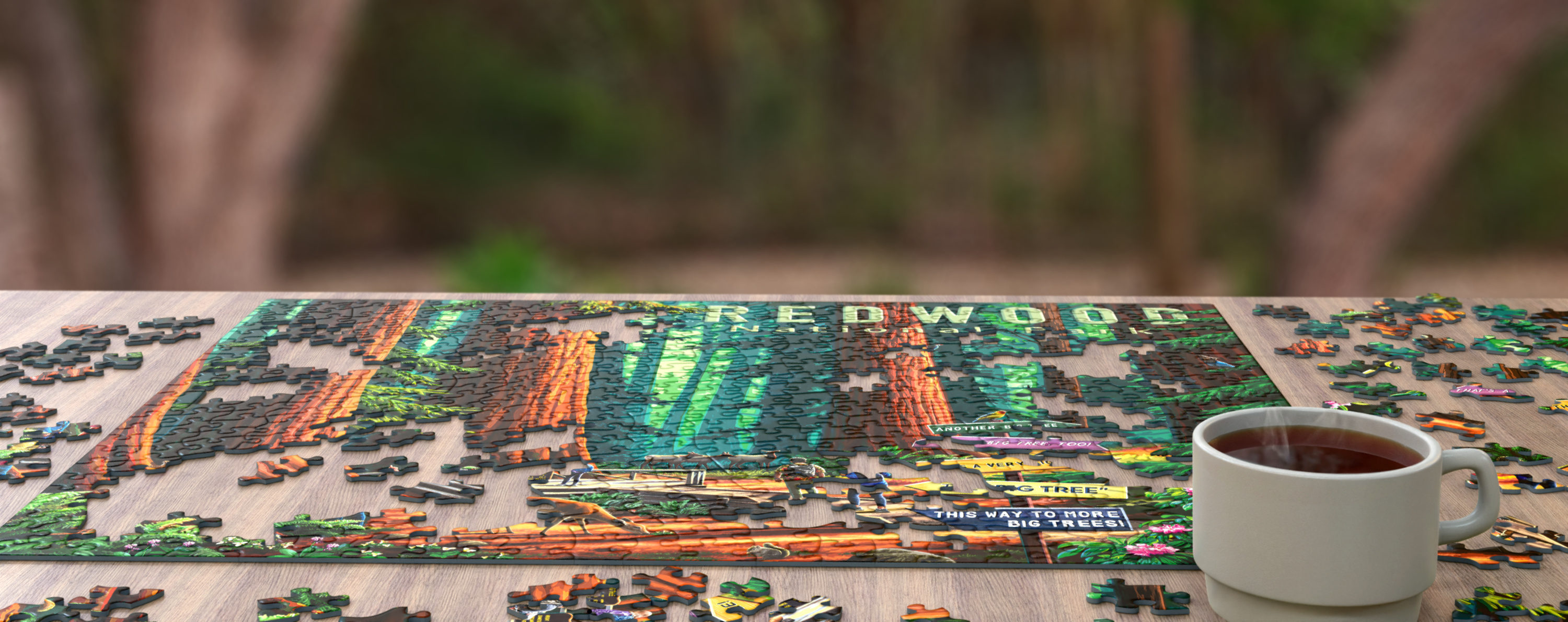
Picture this: a warm cup of tea, a clear table, and a box of puzzle pieces. At first, the chaos of shapes and colors may overwhelm you. But as you begin sorting — by edges, by colors, by patterns — something subtle happens. Your breath calms. The noise of your thoughts quiets. You focus, piece by piece.
This isn’t just poetic. Psychologists describe a similar mental state as “flow” — a deeply immersive experience where attention is fully absorbed in the present task, self-awareness fades, and time feels distorted. Flow was first described by psychologist Mihály Csikszentmihályi and is recognized as a state of optimal engagement and intrinsic motivation.
While most research on flow focuses on work or sports, the underlying principle is applicable: activities that demand attention without overwhelming the mind can foster flow — and puzzles are one such activity.
At its core, a puzzle requires sustained attention, pattern recognition, and problem-solving. These cognitive processes gently pull your mind into the here and now, effectively quieting ruminative thoughts and anxiety.
Digital Detox
In an age dominated by screens, our brains live in a state of continuous partial attention, rapidly switching from task to notification. This type of digital overload is associated with higher stress, reduced focus, and poorer well-being. Studies show that reducing screen time — even moderately — can improve mood, reduce perceived stress, and enhance sleep and mental health outcomes.
Unlike push notifications and endless feeds, puzzles are a tangible, screen-free activity. The tactile experience of handling pieces engages your senses in a grounded way — the colors, textures, and physical manipulation provide a break from digital stimuli. Even short breaks from screens have been linked to improved clarity, reduced anxiety, and better focus.
This isn't just anecdotal: it mirrors what researchers see in controlled interventions where digital detoxes improved emotional well-being, reduced anxious or depressive symptoms, and enhanced sleep quality versus typical usage patterns.
Actual Stress Relief
The calming effect of focused leisure activities isn’t just subjective — it has physiological roots. Activities that allow focused attention and relaxation can activate the parasympathetic nervous system — the “rest and digest” state — lowering heart rate and reducing stress hormone (cortisol) activation.
While direct randomized controlled trials on jigsaw puzzles and cortisol are limited, several wellness and psychology sources connect focused, low-stress hobbies with decreased stress markers, including lower perceived stress and improved emotional regulation.
By contrast, continuous screen use is associated with elevated cortisol and disrupted sleep cycles, further highlighting the contrast between mindful puzzles and digital stressors.
The Joy of Small Triumphs
There’s more to puzzling than focus and stress reduction — it hits deeply human needs for progress and accomplishment. Every piece placed is a small victory, and those tiny wins accumulate into a complete picture. That sense of achievement can spark dopamine release, reinforcing motivation and lifting mood.
Cognitive leisure activities like puzzles also contribute to what experts call cognitive reserve — the brain’s ability to adapt and compensate against age-related changes. Regular engagement in mentally stimulating activities is linked with higher performance on cognitive tests later in life.
In Summary
If you’re craving calm in a world of alerts and endless to-dos, consider this: jigsaw puzzles are more than a hobby — they’re a tool for mindfulness.
They can:
- Encourage deep, present-moment focus akin to flow states.
- Offer a valuable break from screens and digital overload.
- Support emotional regulation and reduce stress.
- Provide satisfying accomplishments and cognitive engagement.
So next time you feel overwhelmed or unfocused, reach for a puzzle. Sit down, breathe, and let your mind enjoy the simple act of fitting the pieces together.
Sources:
AARP. Hobson, Katherine. “‘Reducing Screen Time Improves Mental and Physical Health,’” AARP, March 19, 2025.
BecomingUnbusy.com. “Benefits of Puzzles: 3 Science-Backed Benefits of Puzzling.”
BMC Medicine. “Smartphone Screen Time Reduction Improves Mental Health: A Randomized Controlled Trial.” BMC Medicine 23, Article 107 (2025).
Csikszentmihalyi, Mihaly. Flow: The Psychology of Optimal Experience. New York: Harper & Row, 1990.
Felsted, Jasmine, Codruta Boar, and others. “Active Nudging Towards Digital Well-Being: Reducing Excessive Screen Time on Mobile Phones and Potential Improvement for Sleep Quality.” Frontiers in Psychiatry 16 (2025).
Goodnet. “How Puzzles Can Help Boost Mindfulness.” Goodnet.org.
HealthCrunch.org. “Digital Detox: Why Your Brain Needs Time Offline.” HealthCrunch, October 3, 2025.
Medical News Today. “Flow State: Definition, Examples, and How to Achieve It.” April 19, 2022.
PubMed. “Effects of Limiting Digital Screen Use on Well-Being, Mood, and Biomarkers of Stress in Adults.” PubMed (2024).
U.S. Surgeon General. “Digital Detox and Well-Being.” PubMed (2023).
Share:
QUALITY - Reducing Glare, Increasing Fun!
HEALTH: Sharpening Your Mind