
The Benefits of Puzzling Together
In our increasingly digital world, finding meaningful ways to connect with others can be a challenge. While puzzles are often viewed as a solitary, introspective hobby, they are actually one of the most effective tools for fostering social bonds and emotional resilience.
From the kitchen table to the community center, the act of puzzling together creates a unique environment for communication, emotional regulation, and shared achievement.
A Catalyst for Low-Pressure Communication
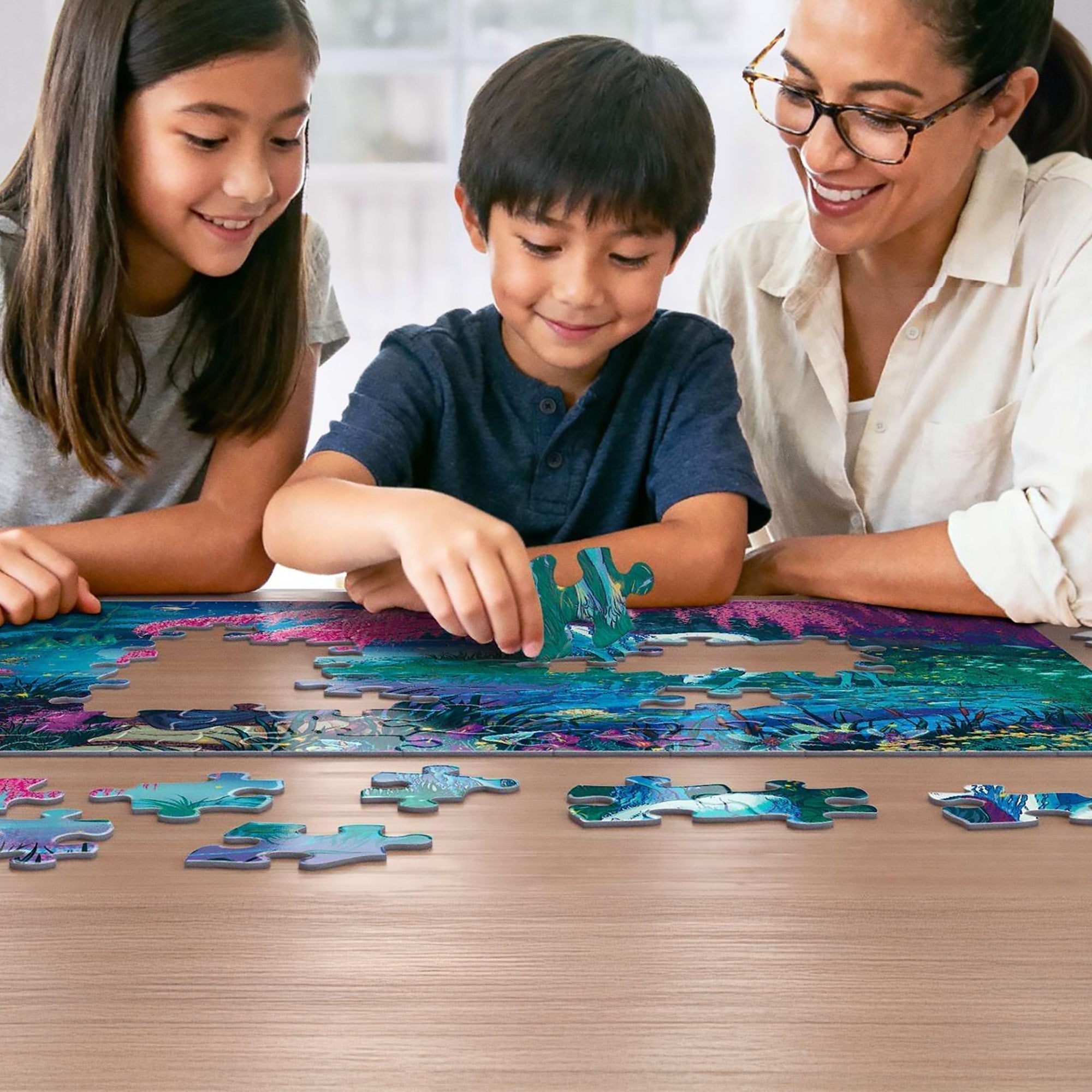
One of the greatest social hurdles in any relationship — whether between parent and child or two new friends — is the pressure of face-to-face conversation. Puzzles remove this barrier by providing a side-by-side activity or an activity where people are looking down rather than directly across from each other.
- Parallel Play for Adults: Much like children playing near each other, puzzling allows people to exist in the same space with a shared goal.
- The Flow of Conversation: Because your hands and eyes are occupied, conversation tends to emerge more naturally and with less anxiety. There is no need to maintain constant eye contact, which often makes it easier for people to discuss difficult or complex topics.
- Filling the Silence: Another benefit of working together is that there is no need to fill ALL the silence. Conversation can proceed at a much slower pace, and periods of silent focus are not seen as awkward.
The Science of the "Dopamine Hit"
There is a specific, measurable emotional reward that comes with puzzling. Every time you find a matching piece, your brain releases a small burst of dopamine, a neurotransmitter associated with reward and pleasure.
When working in a group, this reward is amplified through collective success. Completing a difficult border or finishing a 1,000-piece landscape creates a shared sense of pride. This boost in self-esteem is particularly valuable for children and seniors, as it reinforces a sense of competence and agency.
Bridging the Generation Gap
Puzzles are one of the few activities that truly span generations. A five-year-old, a thirty-year-old, and an eighty-year-old can all sit at the same table and contribute meaningfully.
- Shared Language: Puzzles don't require specific physical strength or modern tech-savviness. They rely on pattern recognition and patience—skills that exist across all ages.
- Family Traditions: Many families use a "permanent" puzzle station during holidays as a neutral ground where family members can drift in and out, contributing a few pieces while catching up on life.
Building Emotional Resilience
Emotional well-being isn't just about feeling good; it’s about handling "bad" moments effectively. Puzzling is a fantastic playground for developing frustration tolerance.
A large, complex puzzle cannot be rushed. It may also require the ability to handle a missing piece frustration and the patience to try dozens of combinations before finding a fit. Toggling between the frustration of a difficult section and the satisfaction of solving it helps build emotional resilience — a skill that translates directly to managing stress in the workplace and personal life.
In Summary
While often viewed as a solitary pursuit, jigsaw puzzles serve as a powerful medium for social and emotional flourishing. By providing a "low-pressure" environment for communication, they allow for deeper interpersonal connections without the anxiety of forced conversation. Emotionally, the process of puzzling builds resilience by training the brain in patience and frustration tolerance, all while providing frequent "dopamine hits" through incremental success.
Whether used as a bridge between generations or a tool for group bonding, the shared act of puzzling transforms a simple hobby into a foundational exercise for collective well-being and emotional intelligence.
Sources:
Aknin, L. B., Dunn, E. W., & Norton, M. I. (2012). Happiness runs in a circular motion: Evidence for a positive feedback loop between prosocial spending and happiness. Journal of Happiness Studies, 13(2), 347–355.
Battaglini, A. M., & Raugh, M. S. (2015). The social puzzle: Group dynamics and cooperative play. Psychology Today Press.
Cobb, S. (1976). Social support as a moderator of life stress. Psychosomatic Medicine, 38(5), 300–314.
Duhigg, C. (2012). The power of habit: Why we do what we do in life and business. Random House.
Gable, S. L., & Reis, H. T. (2010). Good news! Capitalizing on positive events in an interpersonal context. Advances in Experimental Social Psychology, 42, 195–257.
Pekrun, R., & Linnenbrink-Garcia, L. (2014). International handbook of emotions in education. Routledge.
Pillemer, K. (2013). 30 lessons for loving: Advice from the wisest Americans on love, relationships, and marriage. Hudson Street Press.
Seligman, M. E. P. (2011). Flourish: A visionary new understanding of happiness and well-being. Free Press.
Share:
HEALTH: Physical Vitality
New for 2026: Fresh Releases & Our First 300-Piece Count